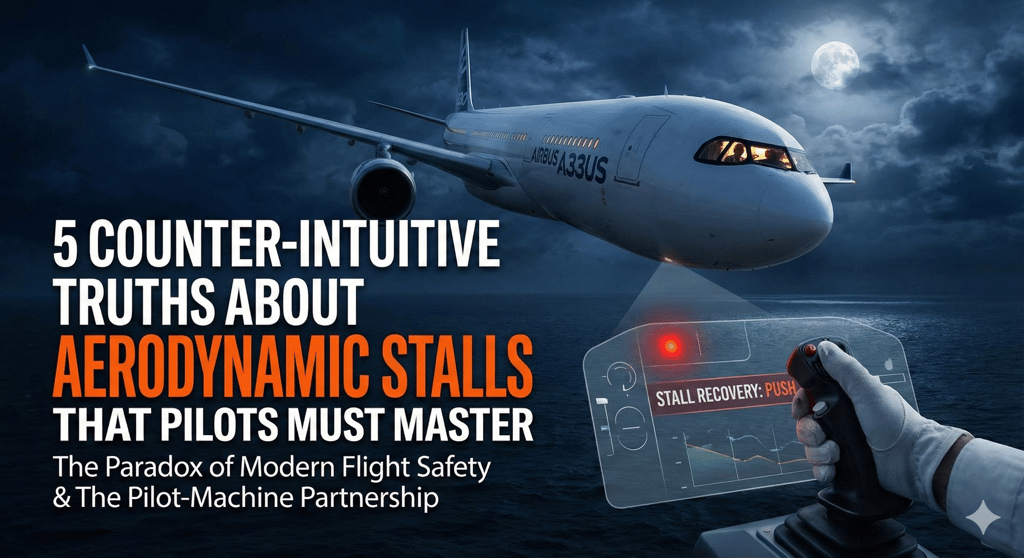
5 Counter-Intuitive Truths About Aerodynamic Stall That Pilots Must Master
Do you really understand stalls? Discover 5 crucial facts about angle of attack, the dangers of automation, and why your instincts might be wrong when recovering from an aerodynamic stall.
BLOGTECHNICALRECENTES
1/26/20265 min read
Introduction: The Paradox of Modern Flight Safety
Modern air travel is a marvel of engineering and arguably the safest form of mass transportation ever devised. Yet, a paradox lies at the heart of this success. When the rarest of accidents do occur, they often reveal a complex and sometimes confusing relationship between pilots and their highly automated aircraft.
The 2009 tragedy of Air France Flight 447, which vanished over the Atlantic, is a profound example. The aircraft, a sophisticated Airbus A330, entered an aerodynamic stall from which it never recovered, leading to the loss of all 228 people on board. This event forced the global aviation industry to re-examine the core principles of flight, the role of automation, and the nature of pilot training. This article distills five critical, and often counter-intuitive, truths about aerodynamic stalls that have reshaped modern pilot training.
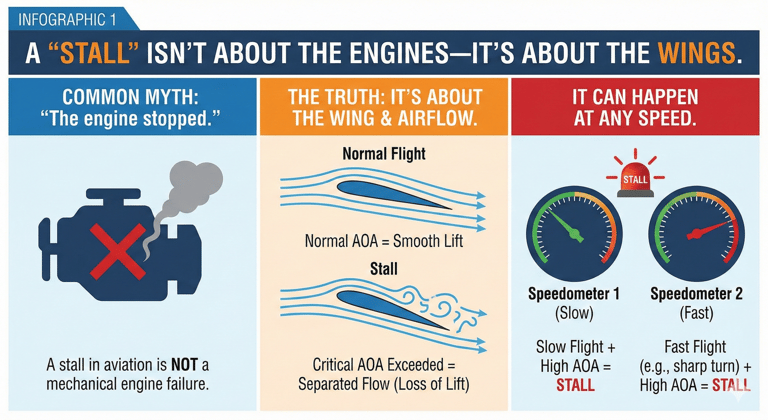
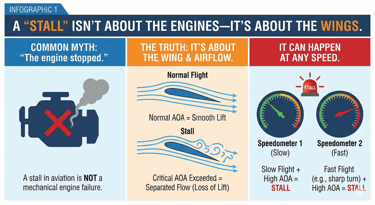
1. A 'Stall' Isn't About the Engines—It's About the Wings, and It Can Happen at Any Speed.
The first and most critical truth is to dispel a common misconception. In aviation, a "stall" is not a mechanical failure like a car engine stalling. It is a purely aerodynamic condition that occurs when the wing exceeds its critical "Angle of Attack" (AOA). The AOA is the angle between the wing and the oncoming air. Exceed this critical angle, and the smooth airflow over the wing separates and becomes turbulent, causing a dramatic loss of lift.
This leads to the most counter-intuitive point: an aerodynamic stall is related to the Angle of Attack, not airspeed. An aircraft can exceed its critical AOA and enter a stall at any airspeed—fast or slow. This fundamental misunderstanding contributed to the confusion on the flight deck of AF447.
The pilots did not recognize the aircraft was in a stall. Despite the stall warning activating 75 times, the crew misinterpreted the situation, believing they were in an overspeed condition.
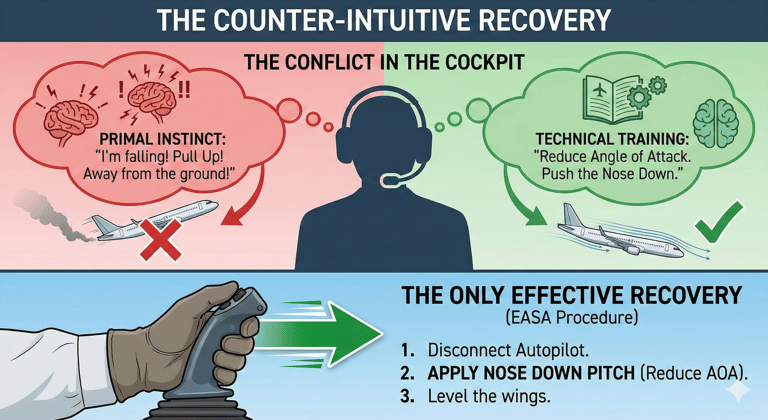
2. The First Rule of Stall Recovery: Push the Nose Down.
The single most critical action to recover from an aerodynamic stall is to reduce the angle of attack. In practice, this means applying nose-down pitch control -pushing the control column or sidestick forward.
This action is profoundly counter-intuitive. Pushing the nose toward the ground when the aircraft is already falling feels fundamentally wrong. It defies the powerful, primal human instinct to pull away from the ground when falling, an instinct that can override hundreds of hours of training in a high-stress, "startle" environment. Yet, it is the only way to re-establish smooth airflow over the wings and regain lift. The European Union Aviation Safety Agency (EASA) outlines a simple, universal recovery procedure:
1. Disconnect the autopilot.
2. Apply nose down pitch control.
3. Level the wings.
This simple-sounding procedure can be incredibly difficult to execute under the duress of a real-world upset. The "startle" factor—an uncontrollable, automatic reflex to a sudden, unexpected event—can overwhelm a pilot's training. In the case of Air France 447, the crew made repeated "excessive nose-up commands," which held the aircraft deep in the stall and sealed its fate.
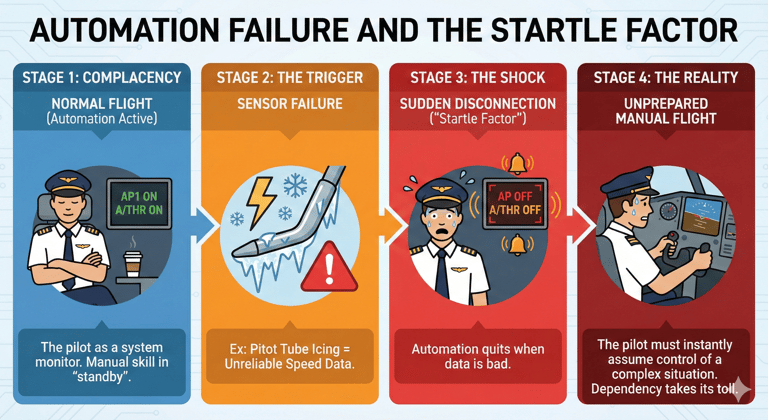
3. Automation Can Vanish at the Worst Possible Moment.
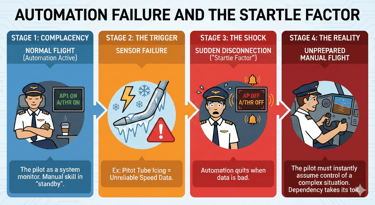
Modern aviation has become a showcase for automation, which has undeniably enhanced safety and precision. However, this has also led to a degree of "automation dependency," where manual flying skills can degrade. The danger arises when that automation suddenly disconnects, often when it is needed most.
The Air France 447 accident began with a seemingly minor issue: ice crystals clogged the aircraft's pitot tubes, which measure airspeed. The aircraft's flight computers, receiving unreliable data, followed their design logic: they disconnected the autopilot and autothrust. This instantly handed control of a complex, high-altitude upset to pilots who were unprepared for manual flight in those conditions, stripping away the automated protections they had come to rely on.
The legacy of Flight 447 serves as a powerful reminder: automation is a tool, not a crutch, and pilots must remain fully engaged, informed, and prepared to take control when needed.
4. An Airplane's 'Personality' Can Change Mid-Flight.
Pilots of modern fly-by-wire aircraft operate machines governed by sophisticated "Flight Control Laws," but not all manufacturers approach the pilot-automation relationship with the same philosophy. This difference is most pronounced between Airbus and Boeing, reflecting two distinct views on the pilot's role.
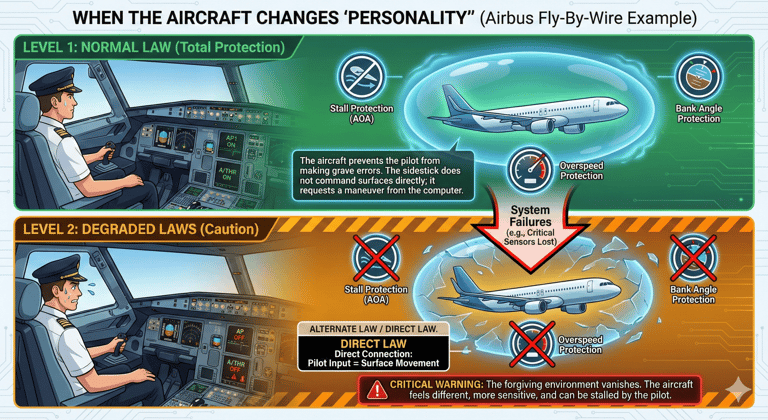
Airbus prioritizes protecting the aircraft from the pilot. In its "Normal Law," the aircraft provides a full suite of flight envelope protections. For example, High Angle of Attack protection will physically prevent a pilot from stalling the aircraft, no matter how far back they pull the sidestick. In contrast, Boeing's philosophy prioritizes giving the pilot ultimate authority. Its systems provide tactile feedback and warnings, such as increasing control column pressure, but will not prevent a pilot from exceeding the normal flight envelope.
The danger for pilots arises when system failures cause an aircraft's "personality" to change. On an Airbus, the system can degrade to "Alternate Law" or "Direct Law," where these protections are progressively stripped away. In Direct Law, the forgiving, protected environment vanishes, and control inputs have a direct relationship to control surface movement. The pilot is left flying a machine that feels completely different and is far less forgiving, a sudden shift they must be prepared to handle.
5. Sometimes, the Plane Has to Save the Pilot From Themselves.
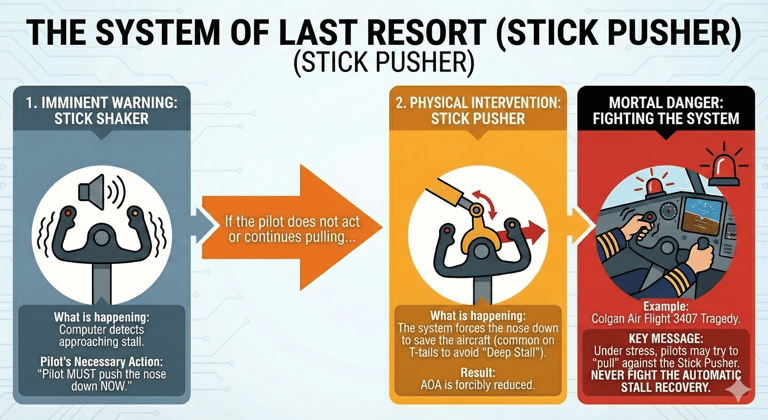
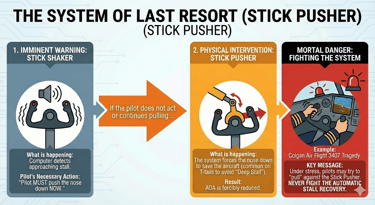
Recognizing that human pilots can make mistakes under pressure, engineers have designed automated stall protection systems that can intervene directly. The most common are the "stick shaker" and "stick pusher."
The sequence begins when the aircraft's computers sense an impending stall. The "stick shaker" activates, violently vibrating the pilot's control column to provide an unmistakable tactile and aural warning. If the pilot fails to take corrective action by pushing the nose down, the "stick pusher" can activate. This system automatically applies a powerful nose-down force to the control column, forcing the aircraft's angle of attack to decrease and preventing a full stall.
This is a critical safety feature, especially on aircraft designs like T-tails that can be susceptible to a dangerous "deep stall," where the tail's control surfaces become ineffective in the wing's turbulent wake. The 2009 crash of Colgan Air Flight 3407 is a stark example of this system being tragically misunderstood. The captain responded inappropriately to the stick shaker and then actively fought against the life-saving action of the stick pusher, a tragic example of how stress-induced fixation can lead a pilot to fight the very system designed to save them.
Conclusion: A Partnership Between Pilot and Machine
The intricate safety net of modern aviation relies on a deep understanding of the partnership between pilots and their sophisticated machines. The lessons learned from tragedies like Air France 447 underscore a timeless truth: while automation is a powerful and essential tool, it is no substitute for fundamental airmanship. Manual flying skills and a core grasp of aerodynamics remain absolutely critical for every pilot.
The relationship between pilot and plane is constantly evolving. As automation grows ever more sophisticated, how do we train for that one-in-a-million moment when the machine unexpectedly hands control back and says, "Your airplane"?
Did you enjoy it?
Spread the word
Contact
Fale conosco para mais informações.
© 2025. All rights reserved.
About me