
Douglas DC-3: The Airplane That Set the World Flying
The Douglas DC-3 was more than just an airplane — it was a turning point in aviation history. In this post, you'll discover how the project that revolutionized global air travel was born, the challenges faced by the Douglas Aircraft Company, and how this sky-bound icon became the backbone of commercial and military aviation in the 20th century.
BLOGHISTORYRECENTES
12/23/20258 min read
Introduction
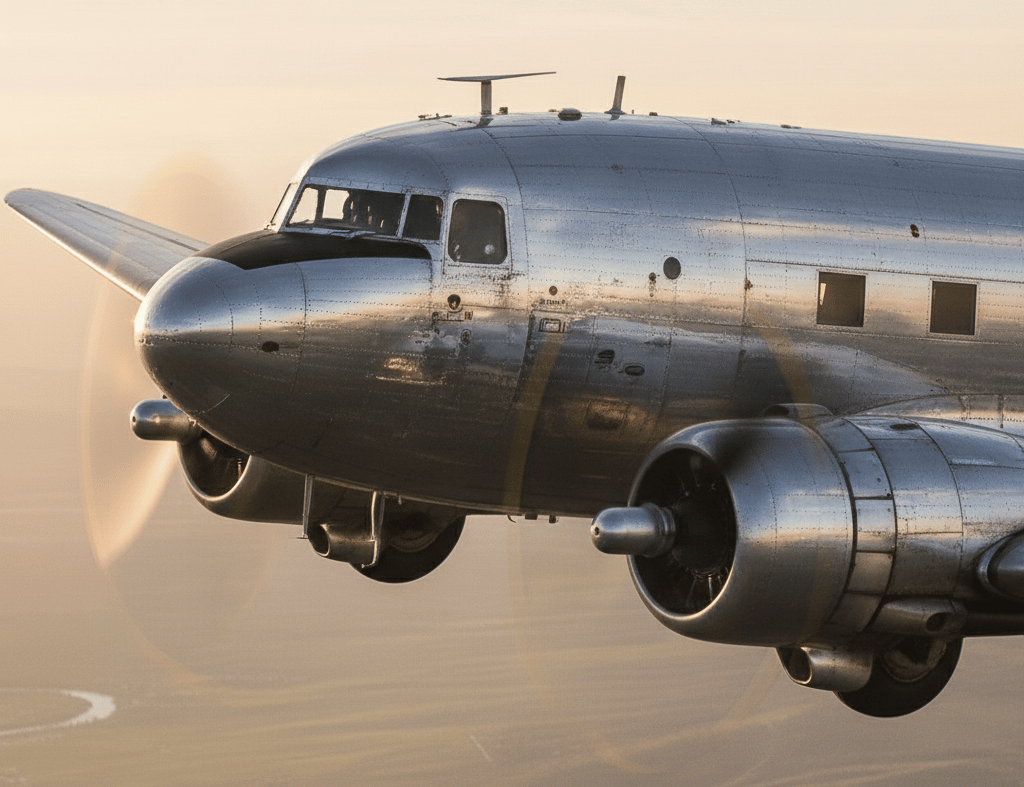
Few aircraft in aviation history have achieved a legendary status like the Douglas DC-3. Known as the airplane that “set the world flying,” the DC-3 not only revolutionized commercial air transport but also played a central role in global conflicts and the integration of remote regions. Since its first flight in 1935, the DC-3 has become synonymous with reliability, versatility, and longevity, celebrated by enthusiasts, pilots, and airlines to this day.
In this post, we’ll dive into the fascinating journey of the DC-3: from the historical context and motivations behind its creation, through its technical development and challenges, to its remarkable operational history and lasting impact on commercial aviation. At the end, we suggest infographics and photos to visually illustrate this epic of the skies.
The Birth of the DC-3 Project: Historical Context and Motivations
The Aviation Scene in the 1930s
In the 1930s, commercial aviation was still searching for its identity. Passenger airplanes were slow, uncomfortable, and, above all, unprofitable. Airlines relied heavily on mail contracts to balance their finances, as passenger transport alone was not enough to ensure financial sustainability.
The Boeing 247, launched in 1933, was one of the first all-metal, modern airplanes, but its production was restricted to United Airlines, leaving competitors like Transcontinental and Western Airlines (TWA) and American Airlines at a disadvantage. TWA, dissatisfied with Boeing’s exclusivity, commissioned Douglas Aircraft Company to develop a new airplane, resulting in the DC-1 and later the DC-2.
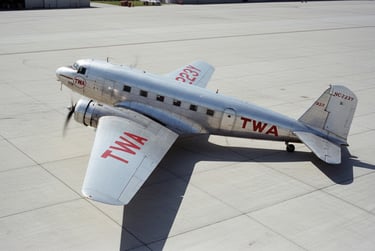
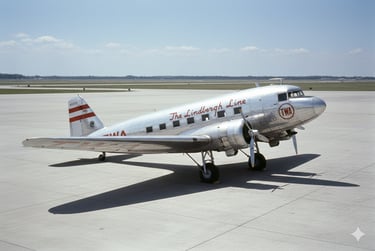
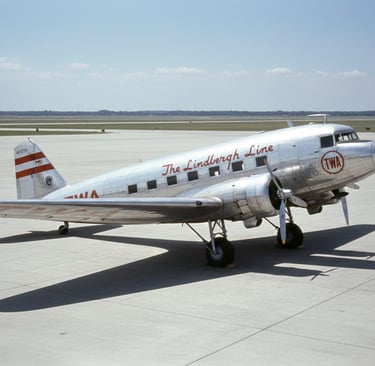
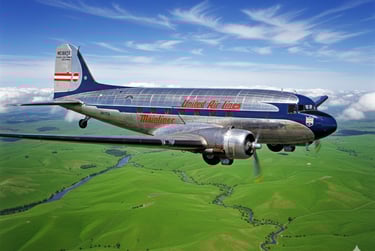
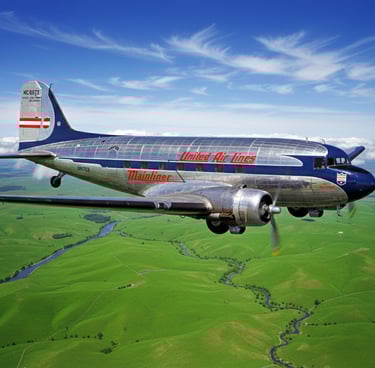
Douglas DC-1
Douglas DC-2
Douglas DC-3
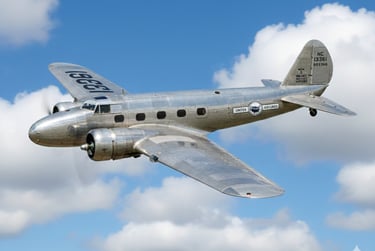
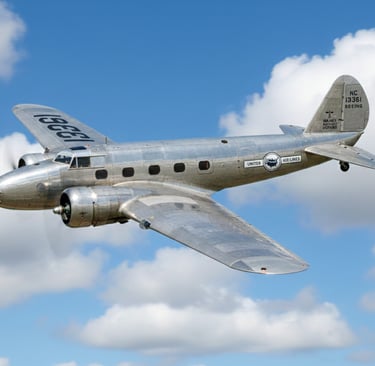
Boeing 247
The Decisive Role of American Airlines
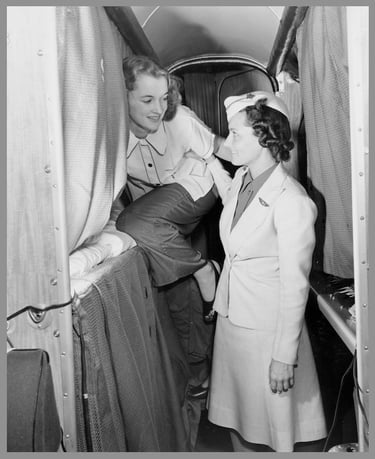
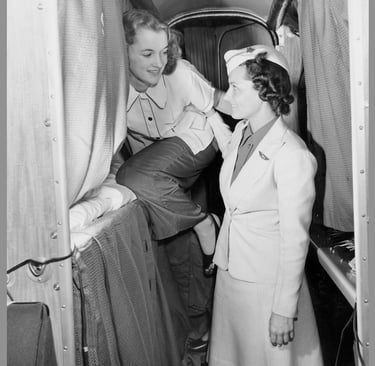
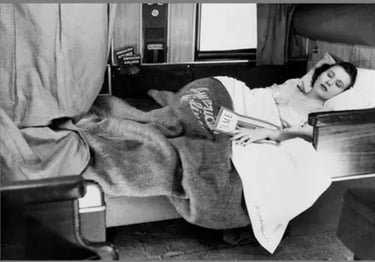
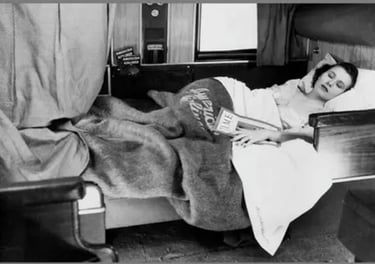
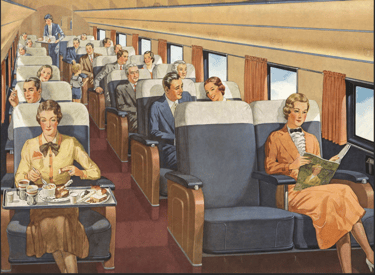
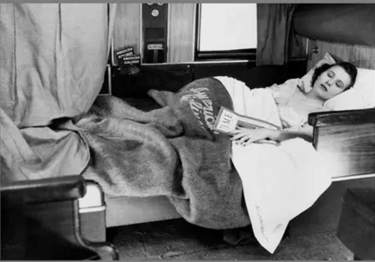
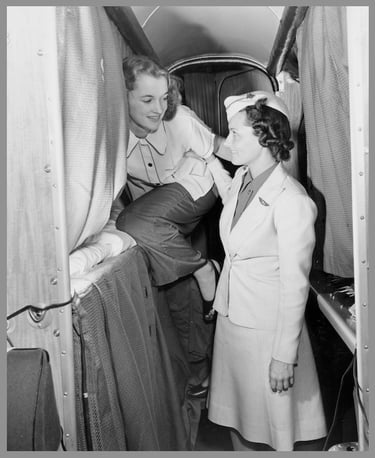
The real push for the DC-3 came from American Airlines, led by Cyrus Rowlett Smith. Smith wanted an aircraft capable of carrying more passengers with comfort and efficiency, especially on overnight transcontinental flights. He proposed to Douglas the creation of a plane based on the DC-2, but with a wider cabin and the possibility of a “sleeper” configuration, similar to Pullman train cars.
After intense negotiations and the promise of an initial order of 20 aircraft, Donald Douglas accepted the challenge. Financing was secured through a loan from the Reconstruction Finance Corporation, an agency created during the Great Depression to stimulate the American economy.
Motivations of Douglas Aircraft Company
For Douglas, the DC-3 project represented a strategic opportunity to consolidate its position in the commercial aviation market. The success of the DC-2 had already demonstrated the company’s technical capability, but it was necessary to go further: to create an airplane that was not only technically superior but also economically viable for airlines, allowing profits solely from passenger transport.
Project Development: Technical Innovations and Challenges
From Drawing Board to Prototype
The development of the DC-3 was led by chief engineer Arthur E. Raymond. The project started from the DC-2’s structure but incorporated a series of improvements: the fuselage was lengthened and widened, allowing for a more spacious cabin; the wings were reinforced and enlarged; and the landing gear was redesigned for greater robustness.
The prototype, named Douglas Sleeper Transport (DST), made its first flight on December 17, 1935—exactly 32 years after the Wright brothers’ flight. The DST was equipped with 14 to 16 beds for overnight flights, but soon the “day plane” version, the DC-3, with 21 seats for daytime flights, would appear.
Striking Technical Innovations
The DC-3 brought a series of innovations to aviation:
Wider Cabin: At 2.3 meters wide, it allowed for greater comfort and the installation of side-by-side beds, something impossible in the DC-2.
Powerful Engines: Initially equipped with Wright R-1820 Cyclone engines, but soon adopting Pratt & Whitney R-1830 Twin Wasp engines with 1,200 hp, which provided more power, reliability, and range.
All-Metal Structure: The robustness of the fuselage and wings allowed operation on short and unprepared runways, as well as withstanding intensive use.
Variable-Pitch Propellers: Improved performance during takeoff and landing, optimizing fuel consumption.
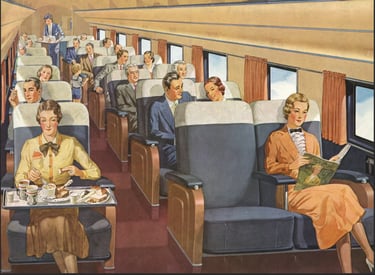
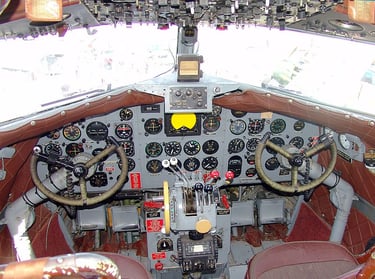
Onboard Comfort and Services: The DC-3 was the first American airplane to offer hot meals prepared in an onboard kitchen, as well as a lavatory and improved sound insulation.
Challenges Faced
The development of the DC-3 was not without obstacles. Douglas faced internal resistance to investing in a new project while the DC-2 was still in production. Additionally, transitioning to a wider cabin and the need to keep weight under control required creative engineering solutions. The tight schedule—from project start to first flight in less than two years—was only possible thanks to the work of over 400 engineers and draftsmen.
Another challenge was convincing airlines and the public that flying at night in an airplane was safe and comfortable. American Airlines invested in marketing campaigns and public demonstrations, drawing crowds to airports to see the new airplane.
Operational History: From Commercial Aviation to World War II
The DC-3 in Civilian Skies
The DC-3 entered commercial service on June 26, 1936, inaugurating regular flights between Chicago and Newark by American Airlines. The success was immediate: the airplane was faster, more comfortable, and more reliable than any competitor. Other American airlines, such as United, TWA, Eastern, and Delta, quickly ordered their own DC-3 fleets.
The impact was global. In 1936, Dutch airline KLM received its first DC-3 and began operating the world’s longest route at the time, from Amsterdam to Sydney. Within a few years, about 90% of the world’s air traffic was carried by DC-3s or variants, establishing the model as the industry standard.
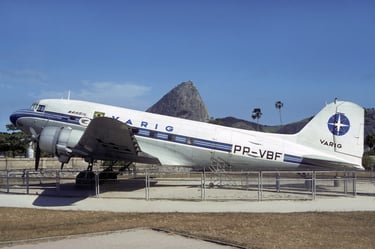
In Brazil, the DC-3 was fundamental for national integration. Airlines such as Varig, Cruzeiro do Sul, VASP, and Panair do Brasil used the model to expand routes and connect previously isolated cities, especially in the Amazon and the country’s interior.
The DC-3 in World War II
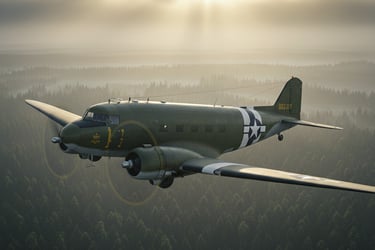
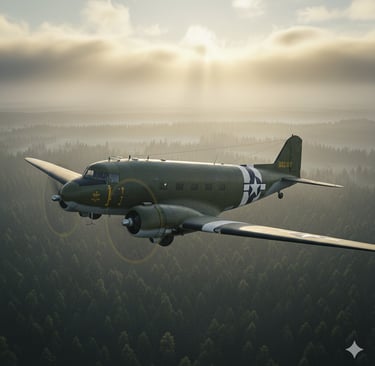
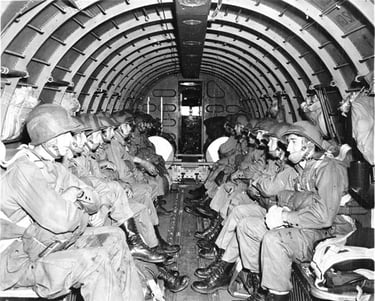
With the outbreak of World War II, the DC-3 was adapted for military use, receiving the designation C-47 Skytrain in the United States and Dakota in the British Royal Air Force. The main modifications included a reinforced floor, enlarged cargo doors, and systems for towing gliders and dropping paratroopers.
The C-47 became the workhorse of Allied logistics, participating in emblematic operations such as D-Day (Normandy invasion), transport over “The Hump” (Himalayas, between India and China), and resupplying troops in Bastogne during the Battle of the Bulge. Its versatility allowed it to transport troops, cargo, light vehicles, and even evacuate the wounded.
In total, more than 10,000 military units were produced in the US, plus thousands under license in the Soviet Union (Lisunov Li-2) and Japan (Showa/Nakajima L2D). The DC-3 served in virtually every theater of operations and remained in military use for decades after the war, including the Korean and Vietnam Wars.
Longevity and Post-War Use
After 1945, the market was flooded with thousands of surplus C-47s, sold at low prices to civilian airlines. This allowed for the rapid expansion of commercial aviation worldwide, especially in developing countries. The DC-3 continued flying on regional routes, cargo transport, humanitarian missions, and even in special operations such as firefighting and flights in Antarctica.
It is estimated that, even after nearly 90 years, about 150 DC-3s and variants are still in operation worldwide, many of them modernized with turboprop engines and state-of-the-art avionics.
The DC-3 and the Commercial Aviation Revolution
Reliability, Range, and Comfort
The DC-3 was the first airplane capable of operating transcontinental flights with safety and regularity. Its cruising speed of 333 km/h, range of up to 2,400 km, and capacity for 21 to 32 passengers enabled the creation of routes previously unviable economically.
Structural robustness and ease of maintenance made the DC-3 famous for its reliability. Pilots and mechanics often said, “the only replacement for a DC-3 is another DC-3.” The airplane could operate on short and unprepared runways, making it ideal for remote regions and airports with little infrastructure.
Onboard comfort was also a differentiator. Sound insulation, seat arrangement, onboard meal service, and the possibility of overnight flights in beds raised the standard of commercial aviation to a new level.
Economic Impact and Business Model
Before the DC-3, airlines depended on government subsidies and mail contracts to survive. The DC-3 changed this paradigm: for the first time, it was possible to make a profit solely from ticket sales. This allowed for route expansion, price reduction, and access to air transport for a broader public.
Airline business models evolved rapidly. The DC-3 enabled the creation of new companies, penetration into regional markets, and the integration of continental countries like Brazil. At its peak, about 90% of the world’s air traffic was carried by DC-3s or variants.
Technical Comparison with Previous Aircraft
Compared to its predecessors, such as the Ford Trimotor and Boeing 247, the DC-3 was superior in virtually every aspect: greater passenger capacity, range, speed, comfort, and safety. Its metal structure, powerful engines, and spacious cabin set a new industry standard.
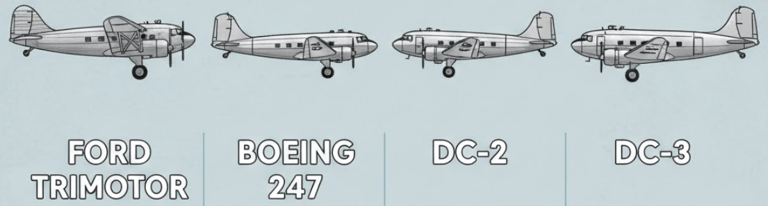
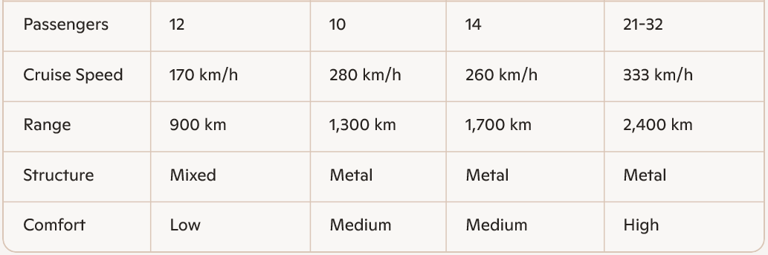
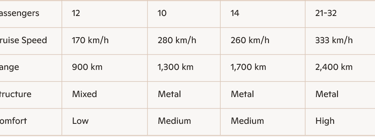
The DC-3 not only surpassed its competitors but became the benchmark for all commercial airplanes developed in the following decades.
Impact in Brazil and Notable Operators
In Brazil, the DC-3 was fundamental for national integration. Airlines such as Varig, Cruzeiro do Sul, VASP, and Panair do Brasil used the model to expand routes and connect previously isolated cities, especially in the Amazon and the country’s interior.
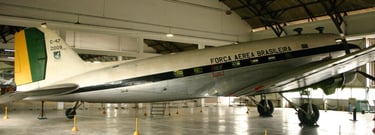
The Brazilian Air Force operated the DC-3 in National Air Mail missions for nearly four decades, playing a vital role in integrating the Amazon and transporting essential supplies. Several historic examples are preserved in museums, such as the Aerospace Museum in Rio de Janeiro and the TAM Museum in São Carlos.
Other notable operators include American Airlines (largest civil fleet), KLM (first European), Cubana de Aviación (first Latin American to operate international flights with DC-3), as well as airlines in Africa, Asia, and Oceania.
Versions, Variants, and Modernizations
Main Civil and Military Versions
The DC-3 gave rise to a family of variants, both civil and military:
DST (Douglas Sleeper Transport): original version with beds for overnight flights.
DC-3: daytime version, with 21 to 32 seats.
C-47 Skytrain: American military version, with reinforced floor and enlarged cargo doors.
C-53 Skytrooper: military version for troop and paratrooper transport.
R4D: American naval version.
Dakota: British designation for military variants.
Lisunov Li-2: Soviet version, adapted for cold climates and local engines.
Showa/Nakajima L2D: Japanese version, produced under license.
Production and Numbers
In total, more than 16,000 units were produced, including:
607 civil DC-3 variants
10,047 military C-47/C-53 variants
4,937 Lisunov Li-2 units (USSR)
487 Showa/Nakajima L2D units (Japan).
Modernizations and the Basler BT-67
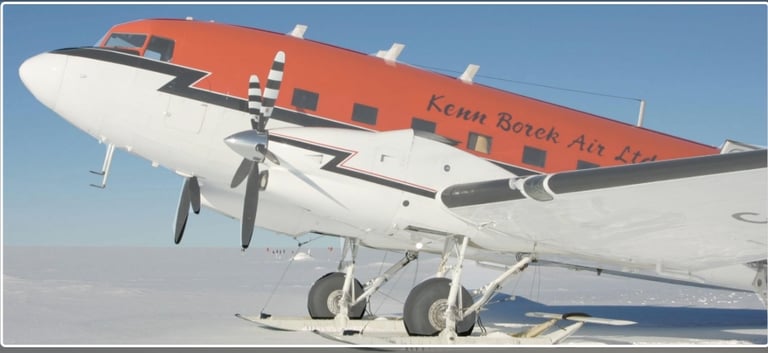
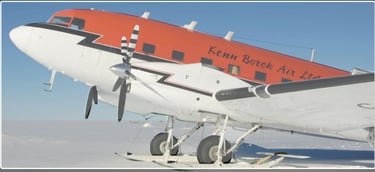
The DC-3’s longevity is such that, from the 1990s onwards, companies like Basler Turbo Conversions began offering deep modernizations, transforming old DC-3s into Basler BT-67s. These versions feature Pratt & Whitney Canada PT6 turboprop engines, lengthened fuselage, modern avionics, and structural reinforcements, allowing operation in extreme environments such as the Arctic and Antarctica
Preservation, Museums, and Historic Examples
The DC-3 is one of the most preserved and celebrated airplanes in the world. Several examples are on display in aviation museums, participate in airshows, or are maintained in flying condition by organizations and enthusiasts.
In Brazil, highlights include:
Museu Aeroespacial (MUSAL), Rio de Janeiro: with historic FAB examples.
TAM Museum, São Carlos: with the “Rose” DC-3, which participated in D-Day.
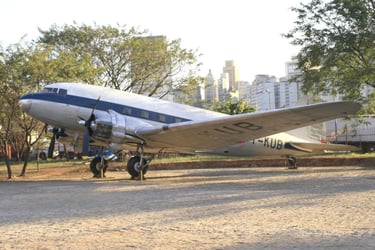
Museum of Technology, São Paulo: with DC-3s that served on the Rio-São Paulo air bridge.
Outdoor exhibitions: in cities such as Porto Alegre, Canarana (MT), Alta Floresta (MT), among others.
Imperial War Museum (Reino Unido)
Aviodrome (Holanda) mantêm exemplares emblemáticos em exposição.
Conclusion
The Douglas DC-3 is much more than an airplane: it is a symbol of innovation, resilience, and global integration. Its influence transcends generations, having been a key piece in democratizing air transport, the Allied victory in World War II, and the integration of continental countries like Brazil.
Did you enjoy it?
Spread the word
Contact
Fale conosco para mais informações.
© 2025. All rights reserved.
About me