
The History of Embraer in Brazil
From ITA to the Skies: The Embraer Saga and the Country That Learned to Build the Future
BLOGRECENTESHISTORY
1/2/20268 min read
Did you enjoy it?
Spread the word
Introduction: Santos Dumont's Dream Scales Up
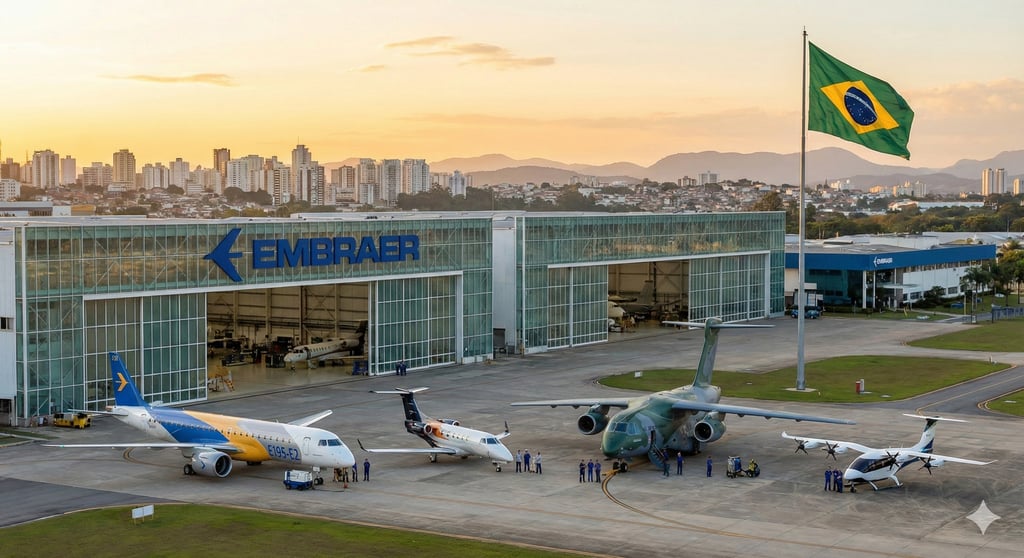
The history of Brazilian aviation is often told starting with the flight of the 14-Bis in Paris, but Brazil's transformation into a global aerospace power actually began on solid ground, in the interior of São Paulo state. For decades, Brazil was seen merely as a buyer of foreign technology, a continental-sized country dependent on imported machines to integrate its vast frontiers. However, a group of visionaries understood that true national independence would not come solely from territorial control, but from the mastery of technical knowledge.
Embraer (Empresa Brasileira de Aeronáutica) was not born by chance or through a simple market opportunity; it was the result of long-term state planning that united elite education, scientific research, and unwavering political will. What began as a dream of engineers and military personnel in the 1940s and 1950s culminated in the creation of the world's third-largest manufacturer of commercial jets. This article explores this journey—from the very first draft of a regional transport aircraft to the state-of-the-art jets that today cross every continent.
The Birth of the IPD and the Bandeirante Project
To understand Embraer, one must take a step back before its foundation, precisely to the Aerospace Technical Center (CTA) and the Aeronautics Institute of Technology (ITA) in São José dos Campos. Under the leadership of Marshal Casimiro Montenegro Filho, Brazil adopted a clear premise: "Before building aircraft, we must build engineers."
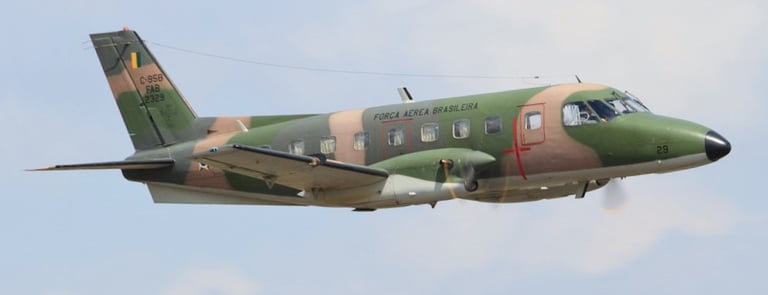
In the late 1960s, within the Research and Development Institute (IPD), a project began to take shape under the code IPD-6504. The goal was ambitious: to create a small twin-engine aircraft capable of landing on precarious runways in the Brazilian interior, yet modern enough to meet the needs of the Brazilian Air Force (FAB) and regional transport.
Under the supervision of French designer Max Holste and the leadership of the then-Major Engineer Ozires Silva, the Bandeirante prototype made its first flight on October 22, 1968. The success of the test proved that Brazil had the technical capacity, but lacked the industrial structure for mass production. It was this gap that led the Brazilian government to decree, on August 19, 1969, the creation of Embraer as a mixed-capital company under state control.
Consolidation in the 70s and 80s: From Ipanema to Global Success
The 1970s were the trial by fire for the young state-owned company. The strategy of Ozires Silva and his team was brilliant: rather than trying to compete immediately with the giant jets from Boeing or Douglas, Embraer focused on underserved niches.
The Bandeirante Conquers the World
The EMB-110 Bandeirante was the initial workhorse. It was robust, versatile, and economical. The major leap occurred when the company managed to certify the aircraft in the rigorous markets of the United States and France. For the first time, planes manufactured in the Southern Hemisphere were operating on North American regional routes, proving that Brazilian engineering was world-class.
Diversification and Sovereignty
While the Bandeirante brought hard currency into the cash flow, Embraer diversified its portfolio to ensure sustainability:
The Ipanema (EMB-200): Launched in 1970, it became the best-selling agricultural aircraft in the country, fundamental to the explosion of Brazilian agribusiness. To this day, it is one of the aircraft with the longest continuous production runs in the world.
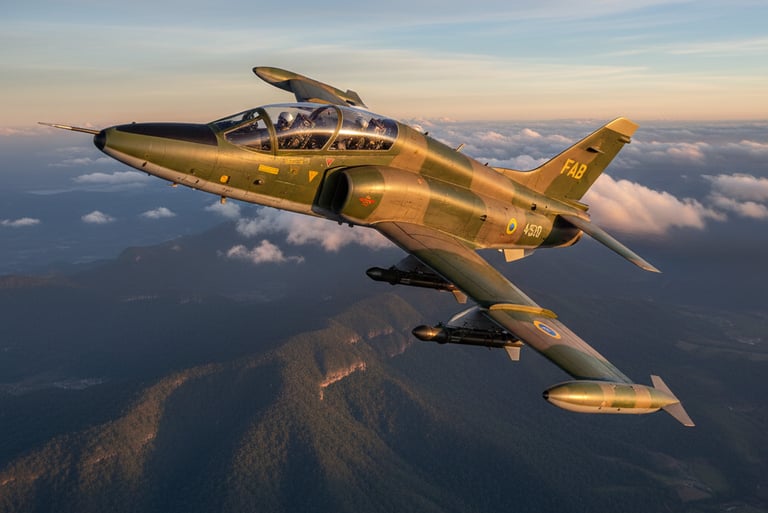
The Xavante (EMB-326): Through a strategic partnership with the Italian firm Aermacchi, Embraer began producing its first trainer and attack jet under license, which brought a huge technological leap in terms of jet propulsion and weapons systems.
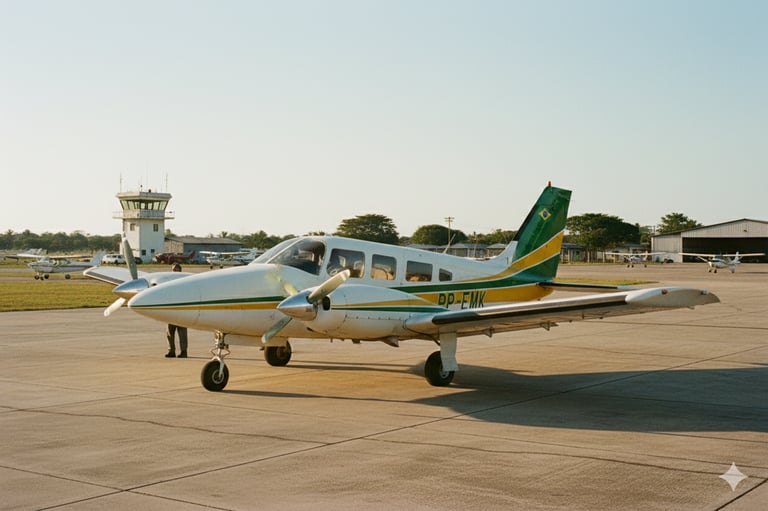
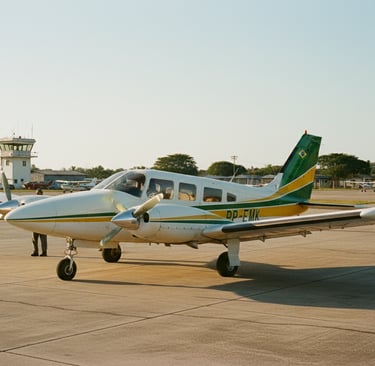
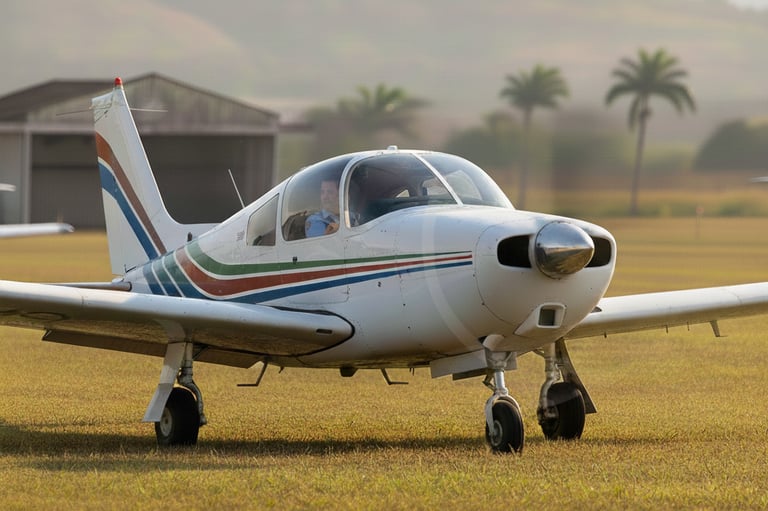
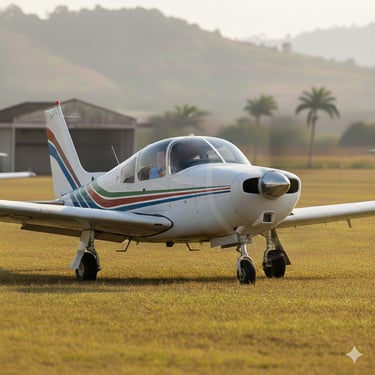
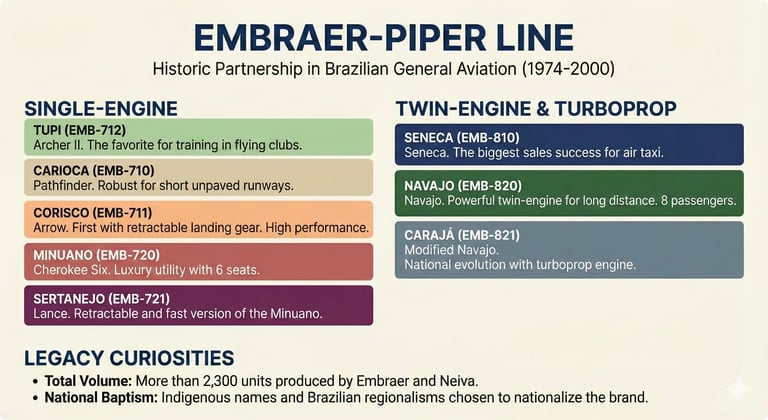
The Piper Partnership: To supply the domestic light aviation market, Embraer signed an agreement with the American company Piper to assemble aircraft such as the Seneca and the Corisco under license, preventing currency from leaving the country and keeping the assembly lines busy.


The EMB-120 Brasília: The Triumph
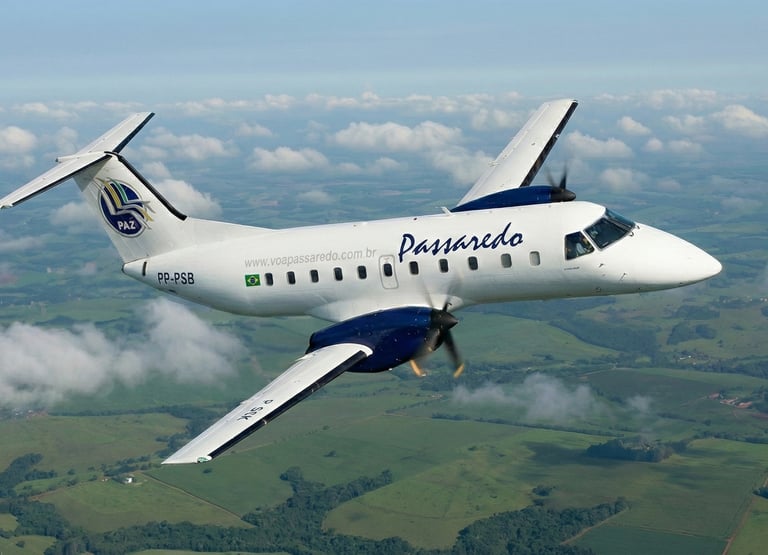
If the Bandeirante opened the doors, the EMB-120 Brasília, launched in the early 80s, blew them wide open. A pressurized, fast, and extremely efficient turboprop, the Brasília became the favorite of regional airlines around the globe. It represented Embraer's transition from a "promising newcomer" to a feared competitor, consolidating the brand in the executive and short-haul commercial aviation markets.
However, not everything was blue skies. The late 1980s would bring geopolitical and economic challenges that would place the company's very existence at risk, setting the stage for its most radical transformation: privatization.


The Crisis of the 90s and Privatization: The Flight of the Phoenix
The late 1980s and early 1990s represented the most turbulent period in Embraer's history. Internally, Brazil was facing the "Lost Decade," characterized by hyperinflation and economic stagnation. Externally, the end of the Cold War drastically reduced defense budgets around the world, affecting orders for military aircraft.
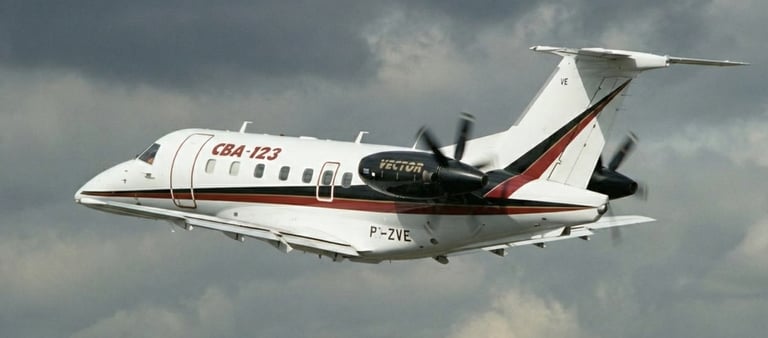
Embraer, still state-owned, suffered from bureaucracy, excessive debt, and a lack of agility to respond to the rapid changes of the global market. In 1990, the company was forced to lay off about one-third of its employees. The project for the CBA-123 Vector, an advanced aircraft developed in partnership with Argentina, proved to be a commercial failure—it was technologically brilliant, but too expensive for the market at the time.
By 1994, the company was technically bankrupt. The solution was privatization, a topic that still generates debate, but which the numbers prove to have been the necessary turning point. On December 7, 1994, Embraer was auctioned off. A consortium led by the Bozano, Simonsen group and pension funds (Previ and Sistel) took control.
The management change was radical: a culture focused solely on engineering gave way to management focused on financial efficiency, customer service, and market intelligence. The "Maurício Botelho Era" (the CEO who led the company post-privatization) focused on a single goal: transforming accumulated technical knowledge into products the world wanted to buy.
The Era of E-Jets: The Leap to the Top of the World
The first major fruit of this new mindset was the ERJ-145. Embraer realized that airlines needed small jets (50 seats) to replace turboprops on regional routes, offering more speed and comfort. The ERJ-145 was a resounding success, with hundreds of units sold to giants like American Airlines and United Airlines.
However, the real masterstroke came at the turn of the millennium with the E-Jets project.
Defining a New Market
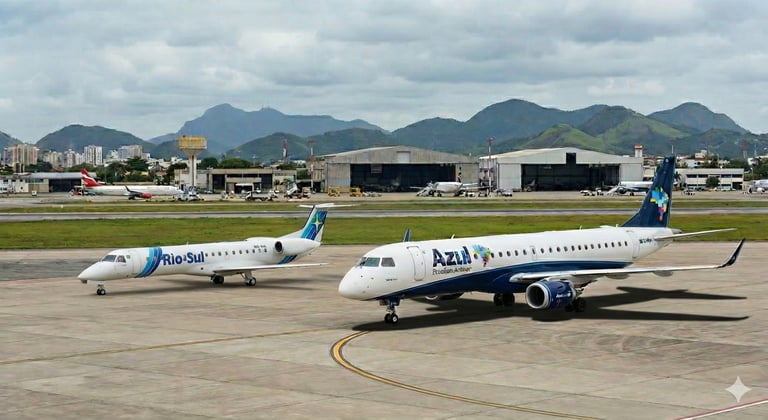
Embraer made a bold decision: it would not try to compete with the Boeing 737 or Airbus A320 (150-200 seat planes), nor would it remain stuck with 50-seat planes. It created a new category: the 70 to 110-seat niche.
Launched in 1999 at the Paris Air Show, the jet family (E170, E175, E190, and E195) featured a "double-bubble" fuselage design, offering more internal space and eliminating the dreaded middle seat. The result was unprecedented market domination:
Comfort: Passengers loved the superior space.
Economics: Airlines discovered that these planes were perfect for routes with intermediate demand, where a Boeing would fly empty and a turboprop would be too slow.
Globalization: E-Jets became ubiquitous at airports in New York, London, Paris, and Beijing.
The Battle with Bombardier
Embraer's success did not go unnoticed. For years, Brazil and Canada waged one of the largest disputes at the World Trade Organization (WTO). Bombardier accused the Brazilian government of subsidizing Embraer through Proex (Export Financing Program), while Brazil accused Canada of doing the same.
This "jet war" forced Embraer to become even more efficient and to seek global supply partnerships. In the end, Embraer not only survived the dispute but ended up surpassing its Canadian competitor in the regional segment, consolidating itself as the third-largest manufacturer of civil aircraft on the planet.
Defense, Executive Aviation, and a Sustainable Future: Beyond the Horizon
Embraer's maturity in the 21st century allowed the company to evolve from a "regional jet specialist" into a diversified aerospace conglomerate. This diversification strategy was fundamental to protecting the company from the cyclical nature of the commercial aviation market.
Reclaiming the Defense Sector: C-390 Millennium
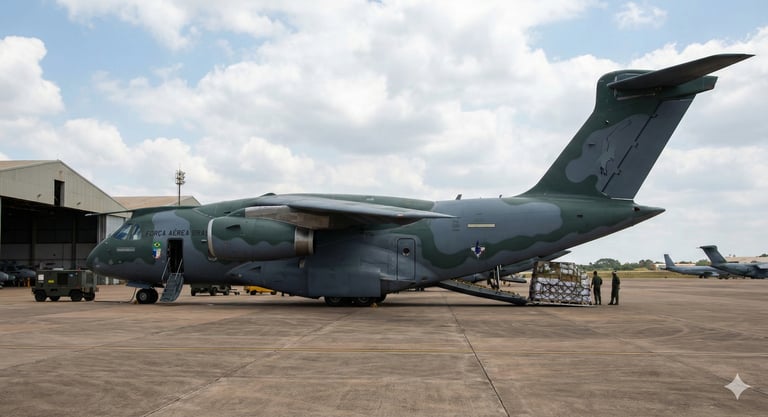
After decades focused on the civil market, Embraer stunned the defense world with the KC-390 (now C-390 Millennium). This is the largest and most complex aircraft ever designed and manufactured in Latin America. Developed to replace the iconic, yet aging, Lockheed C-130 Hercules, the C-390 brought jet technology to military cargo transport.
With in-flight refueling capabilities, armored vehicle transport, and operation on unpaved runways, the Millennium has already conquered demanding markets beyond Brazil, such as Portugal, Hungary, the Netherlands, Austria, and the Czech Republic. It symbolizes Brazilian engineering's ability to innovate in a sector dominated by North American and European giants.
Executive Aviation: Luxury with Brazilian DNA
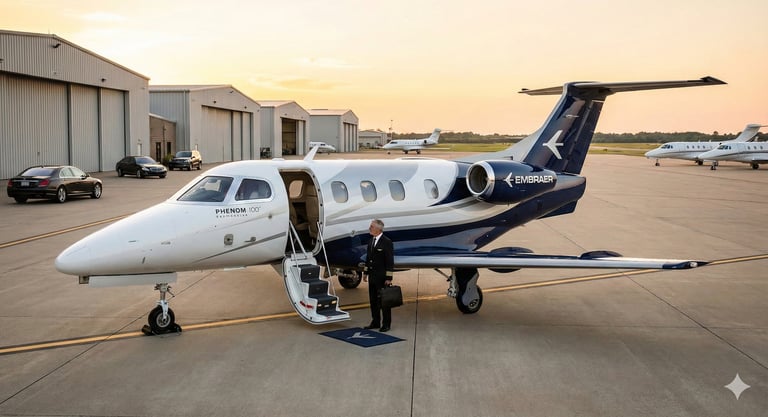
In the early 2000s, Embraer decided to seriously enter the business jet market. What began with the Legacy 600 (based on the ERJ-145 platform) evolved into clean-sheet designs, such as the Phenom and Praetor families. The Phenom 300 became the world's best-selling light jet for over a decade consecutively. The company did not just deliver planes but redefined the concept of ergonomics and cabin design, winning international innovation awards and establishing a new standard for luxury and efficiency.
Innovation and Sustainability: The Eve Project
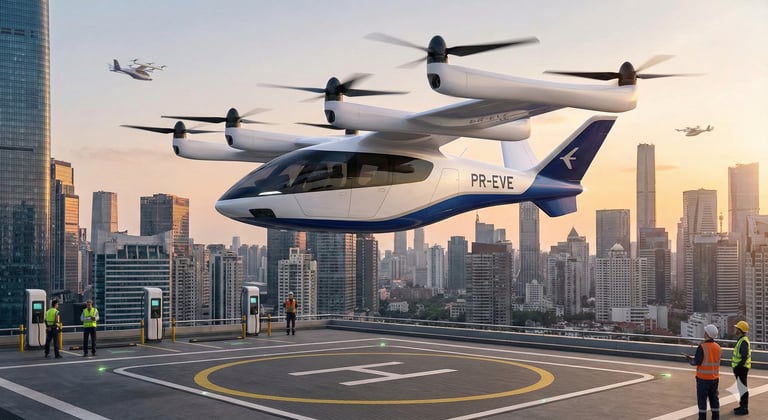
Looking to the future, Embraer created Eve Air Mobility. The company is at the forefront of the eVTOL (electric vertical take-off and landing vehicles) revolution, popularly known as "flying cars." The goal is to decarbonize urban mobility. With an order backlog already exceeding thousands of units, Eve positions Brazil as a key player in aviation's next great frontier: electricity and autonomy.
The Legacy of Innovation and National Sovereignty
Reaching over five decades of history is no small feat for a high-tech company in a developing country. Today, Embraer is one of the key items in Brazil's export portfolio, generating billions of dollars in foreign currency and sustaining a supply chain that employs tens of thousands of highly skilled professionals.
The episode regarding the attempted merger with Boeing, canceled in 2020 by the American giant at the height of the COVID-19 pandemic, served to reaffirm Brazilian resilience. Even in the face of the deal's abrupt end, Embraer quickly reorganized, reintegrated its divisions, and returned to profitability, proving that its strength lies in its own engineering and organizational culture, not just in external alliances.
Embraer’s journey is living proof that Brazil can be much more than a commodities exporter. It demonstrates that with continuous investment in education (ITA), research (DCTA), and professional management, a country can compete on equal footing with the planet's greatest powers.
Conclusion: The Sky Was Never the Limit
To write the history of Embraer is to narrate the evolution of a Brazil that decided to fly high. From the first flight of the Bandeirante in São José dos Campos to the commercial jets transporting millions of passengers globally and the future electric eVTOLs, the company has maintained a unique essence: the ability to transform impossible technical challenges into brilliant commercial solutions.
For the reader, the aviation enthusiast, or the proud Brazilian, Embraer leaves a clear lesson: technology and innovation are the most potent engines for a nation's sovereignty. The future of aviation will be greener, quieter, and more connected, and without a doubt, there will be a Brazilian flag stamped on the fuselage of the aircraft leading this change.
I had the opportunity to fly the Brasilia during my first job with a commercial airline.
Contact
Fale conosco para mais informações.
© 2025. All rights reserved.
About me