Why don’t we have parachutes on airplanes?
Think a parachute would save your life on a Boeing? Think again. Discover the surprising truth about aviation safety and why jumping with parachutes is never an option.
TRIVIABLOGRECENTES
2/4/20262 min read
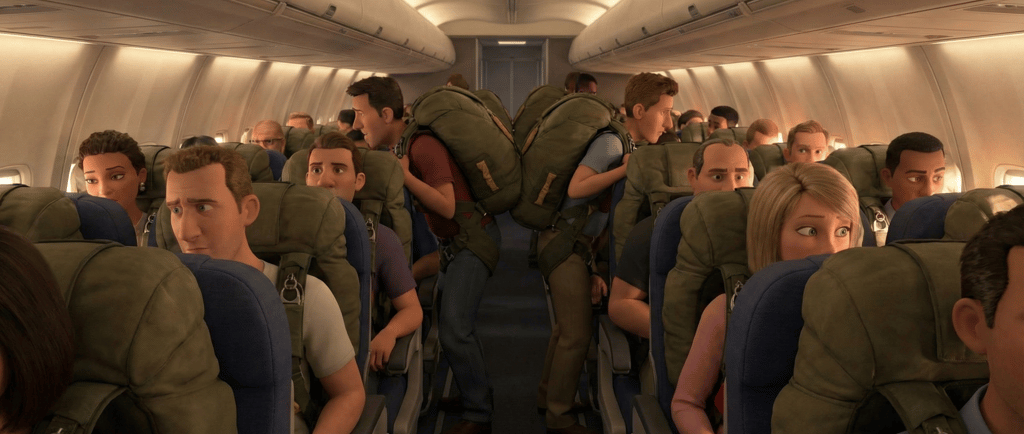
Let’s talk about why we shouldn’t have parachutes on board an airplane.
Have you ever looked out the airplane window, 11,000 meters above the ground, munching on those salty peanuts and thought: “If this engine fails, why on earth isn’t there a parachute under my seat, just like we have a life vest?”
It sounds like a reasonable question, doesn’t it? After all, if a boat sinks, we have lifeboats. If a car flips over, we have airbags. So if a plane goes down… do we just rely on faith?
Hold on. The short answer is that, on commercial flights, parachutes would be virtually useless and potentially even more dangerous. Let’s break down why.
You’re Not Tom Cruise (and Neither Am I)
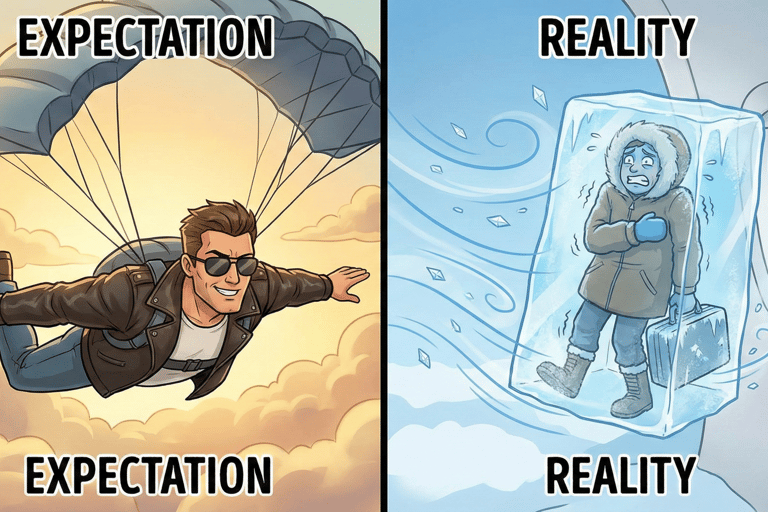
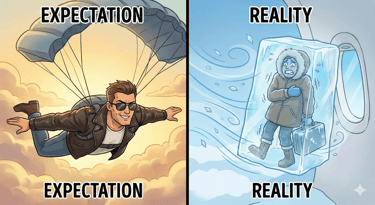
In action movies, a hero opens the door of a jet, jumps out, gives a thumbs-up, pops open a parachute, and lands gracefully. Real life is a bit different.
Commercial airplanes fly in the stratosphere. Outside, it’s around –50°C, and the air is so thin that you’d pass out from lack of oxygen in seconds (hypoxia) before even pulling the cord.
And don’t forget the speed: exiting a metal tube traveling at 900 km/h would make your body hit the air as if it were a concrete wall.
Airplane design doesn’t favor parachutists. Skydiving is done from small aircraft flying slowly, with side doors specifically built for that purpose.
If you tried to open the door of a Boeing or Airbus in flight (and pressurized doors can’t be opened anyway), you’d likely be sucked out and slammed into the wing or tail. Not exactly ideal.
Cabin Chaos
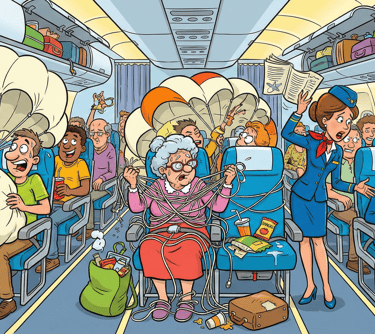
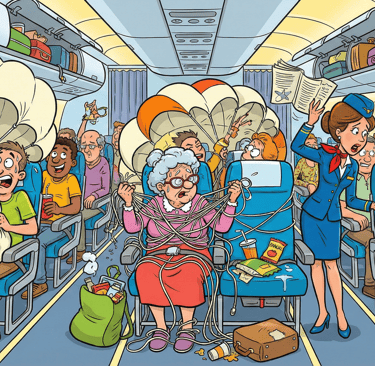
Picture 300 panicked people. Now imagine those same 300 people trying to strap on a backpack full of straps and buckles in a confined cabin while the plane shakes.
Skydiving requires training. A tandem jump (where you’re attached to an instructor) needs special equipment. Handing Grandma Maria in seat 4C a parachute and saying “good luck” wouldn’t cut it.
The Weight (and the Price of Your Ticket)
A parachute kit is heavy. Multiply that by 300 passengers and the aircraft becomes significantly heavier, burning much more fuel. If fuel costs go up, your ticket to Disney would probably double in price.
Aircraft weight isn’t infinite—each model has a maximum weight limit, which affects things like maximum altitude, operating speeds, runway length requirements, and more.
Bottom Line
Commercial aviation invests heavily in redundancy. If one engine fails, the other keeps the plane flying. If the pilot becomes ill, the first officer can take over. Airplanes are built to glide and land, not to dump people into the sky.
It’s statistically the safest mode of transportation in the world. So on your next trip, it’s time to relax, sip some tomato juice, and enjoy the view. You’re far safer here than imagining you’ll turn into a bird at –50°C.
Did you enjoy it?
Spread the word
Contact
Fale conosco para mais informações.
© 2025. All rights reserved.
About me